Showing posts with label C. Fredrik. V. Hellberg. Show all posts

Thursday, August 30, 2012

A draft Guide to the Interests of the Visceral Intricacy Guild


2. Experiential Research 30.08.2012
A draft Guide to the Interests of the Visceral Intricacy Guild

Amanda Ellis   

how people effect the mood and sound of the space. 
how the tactile quality can influence mood and sound.
threshold between environments
PHYSICAL and the PSYCHOLOGICAL
Change of Scale

Case Study
• Universal Studios. Orlando
• Fisherman's Wharf. Macau

Reference
• Journey Into The Centre Of The Earth. Transition
• Ministry Of Sound Nightclub. London

Arnut Areechitsakul 

Resolution. Seeing or Reading information
Shifting of Opposites, (female and male) 

Case Study
• St. Peters Basilica
• The Alhambra

References
• Water Pandulum. Olafur eliasson. 2010.
• The weather project. Olafur eliasson.

Baibua Wachira Leangtanom 

Authenticity. Crave or repel the real 
the creation of myths and legends 
the value of memory and legacy

Case Study
• Landschaftspark. Duisburg-Nord. Latz + Partner. 1991
• Tropical Island Resort in Krausnick, Germany
• Eden Project in Cornwall, UK.

Reference
• Thruman Show. Film

Belle Nutthapat Thanapoonyanan

Iconography - Symbols - Linguistics
Transformable Spaces. Animated space
Hidden narrative. Curiosity for the un reachable
Shift Focus Point 

Case Study
•

Reference
• Trompe L'oeil


Cake Pimlada Bunluthangthum

Overwhelming spatial experience of misguidance.
Novelty. Every night is an opening night.
Static frame, dynamic content. 
People as the most dynamic element in architecture

Case Study
• Mansion 7. Bangkok
• Liberty Hotel. Boston
• Jules Underwater Lodge. Puerto Rico
• Plaza Mayor. Madrid

Reference
• Counter Strike. Computer Game
• Night Clubs
• Public Squares

Nott Varis Niwatsakul

dream//surreal space
Liberty of the fictional 
Unsuspected and Hallucinatory
The Discovery of the Unknown 
Meta Realities

Case Studies
• Madame Tussauds ( country or branch not specified )
• Dream of Venus surrealist pavilion. New York. Salvador Dali. 1939
• Teatro Museo Dalí. Figueres. Salvador Dali. 1974
• Destino. Film. Walt Disney & Salvador Dali. 1940

References
• Ais 4dx Cinema
• Soarin' Over California. Disney California. 2005
• Vertigo Effects
• Dream Stages (Inception)

Nung Chanya Siriphannon 

Framing of the visual field. 
Visual interaction between spaces. 
Spatial Collage.

Case Study
• Maxxi Museum. Rome. Zaha Hadid
• Numba Park. Osaka. Jerde Partnership
• ChonGae Canal Restoration Project. Mikyoung Kim Design
• Mosque of Cordoba

Poom Chayapat Chaiyanun 

Anticipation
Immersive Magic Effects
Tortured Curiosity 
Emotional Control

Case Study
• Jewish Museum. Berlin. Daniel Libeskind

Reference
• Haunted House logic

Shane Viruth  Purichanont

Containing  / Occupying
Space definition by images
Hierarchy of spaces from inside to outside  
Qualities of Containment release

Case Study
• Zürich Airport
• Venetian. Macau

Ton Pasit Rojradtanasiri   

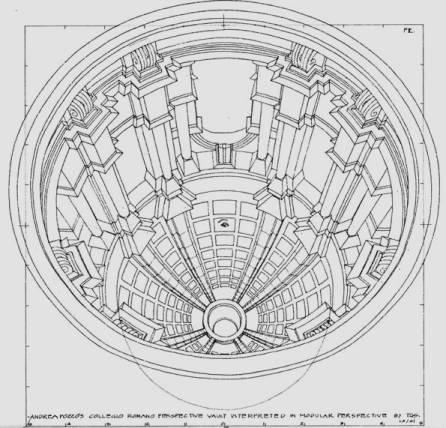
Anamorphosis. Spatial and visual illusions 
The Mask as an Atmospheric Amplifier 

Case Study
• Street art by Kurt Wenner
• Sant'Ignazio Church ceiling
• Palazzo Spada's corridor

Reference
• Venice Carnical
• Street art by Kurt Wenner
• Trompe L'oeil

Yoi Pornprapa Rugwongprayoon

Awarness
Selective Attention
"Cocktail party effect"
localization of sound sources
Auditory scene analysis
Franssen effect

Case Study
• Bellagio. Las Vegas
• Wafi Mall. Dubai


Fredrik Hellberg. Manifesto for a Lucid Architecture. 2006


"In the research and work carried out in this project I have come to some conclusions on how the building with its program should look and work in response to its users. The projects core thesis has from the start been based on the dream as state of consciousness and learning source. Dreams are believable full sensory simulations with the dreamers mind as creator and perceiver and one of the most fascinating and engaging was of perception. Based on that research and my own ideas on what architecture should do I have come to the following conclusions.

 The building will be huge and it should in it’s style, colour and geometry reflect the much more larger program inside the building. The most dynamic thing about architecture is always the people occupying it. Architecture should always make every effort to encourage its occupier to on every scale be more like they are in there full being, and the other way around. The manifesto for this building will on the bases of my dream research be more like a dream than the conventional way of which architecture is prepared and perceived, a structure of such complexity and diversity that there is impossible to perceive it as a whole from any point of view possible, like the dream. The building will have as little repetition as possible and in moving trough its spaces impossible to predict or maybe even imagine, a multidimensional labyrinth. This should also be the case of the out side where the building will be non monumental and faceless. There will be no way of telling the up from the down, back to front or in from out.  The spaces will also have a fine indefinable line between what power the architecture has over you, and what power you have over the architecture, how much the architecture can be changed by you and how much the architecture can change you, like in a dream. Due to the diverse and open sets of programs the architecture will be more like a city than a building. More like a set of ideas floating around. In order to strengthen this I will try to get the building as indefinable as possible when it comes to style by applying every style there is, colours and geometry will have no logical order or place. "    

(Though this might be interesting to read Nott. I was trying to define an undefinable quality, this is roughly as far as I got) 
Interesting article for Belle and Ton and the world regarding Anamorphic Perspective:
http://www.generativeart.com/salgado/anamorphic.htm
Another fine project to get inspired by: http://www.creativeapplications.net/inspiration/enigmatica-inspiration/

Tuesday, August 28, 2012

Examples for Study

Fremont Street. Las Vegas
Garnier Opera House. Paris
Expo 67. Montreal
Hollywood Tower of Terror. Disneyland

Hollywood Tower of Terror. Disneyland
Journey to the Centre of the Earth. Disney Sea. Tokyo
Fisherman's Wharf. Macau
Tropical Island Resort. Krausnick
The Water Cube. Beijing National Aquatics Center
Wizarding World of Harry Potter. Orlando
The Church of Saint Ignatius of Loyola at Campus Martius. Rome
The Church of the Gesù. Rome
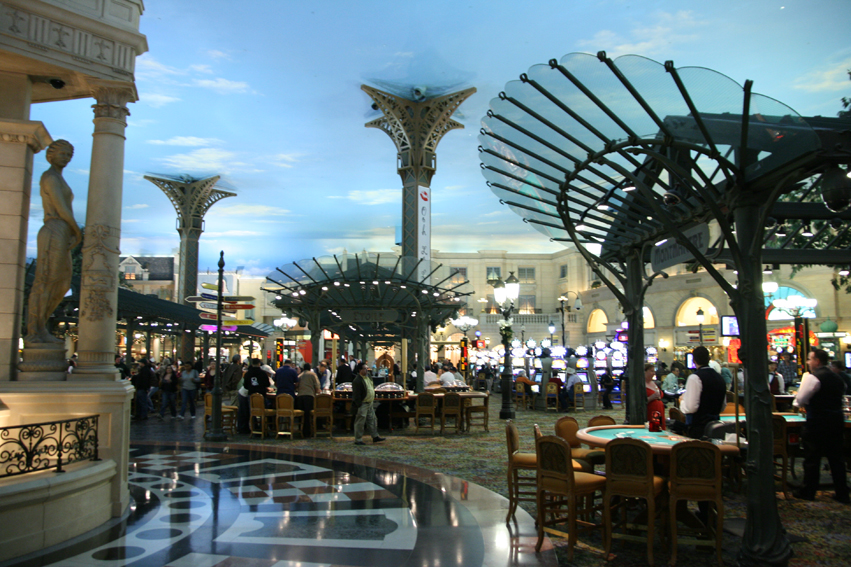
Paris Hotel & Casino. Las Vegas
Venetian. Las Vegas
Circus Circus. Las Vegas

Monday, August 27, 2012


INDA 2541411: Architectural Design IV / Fall 2012 / 
Aj. Carl Fredrik Valdemar Hellberg
Tuesdays and Fridays 13:00-16:30

VISCERAL INTRICACY
(or BIG IS BEAUTIFUL)
Experience Driven Architecture of 
New Underground Shopping Malls

2. Experiential Research  

 Before designing your experience you will choose one artificial environment built for or readapted as an extremely controlled space for experience; theme parks, casinos, hotels, love hotels, malls, spas, modern museums, churches etc. and conduct a careful case study. (The chosen case study does not need to relate to the capriccio but should articulate your personal interests regarding experience architecture.) 

Some of these examples have a clear and rational purpose such as hotels. In other cases the purpose is more unclear or hard to define, such as casinos and cultural theme parks. This first stage of the case study will explore both the spatial and atmospheric aspects as well as the produced effect of the experience. What exactly do you get out of walking through the gallery at the Venetian Macau for instance? It might be obvious but incredibly difficult to translate into usable terminology and methods in a design process.  Is it about pleasure, suspense, or excitement? And in that case, what is the difference?

Your case study will give you the ingredients for that specific experience including light, sound, colour, movement, ornamentation, theme, movement, staff etc. These parameters will give you insight into the complexity of experience design and help you to define your own experience. 

You will begin by collecting data concerning your subject such as:

• History regarding your case study. 
• Facts and Figures; demography, amounts of visitors, revenue, owner etc.  
• Drawings; plans, sections, elevations
• Maps and orientation plans. 
• Promotional Material; brochures, posters, advertisement, fonts, music theme, colour spectrum etc  
• Guest Reviews; tripadvisor, etc.
• Photographs and Videos; Scan the internet for as many photographs as you can find. Google images with large images only selected, flicker, picassa etc. 
• Literature and Movies; Your case study might be featured in a film or a novel. Find out and read it / watch it. 
• Operations; Opening hours, staff, protocols, what is allowed and not allowed, maintenance, 
• Twins; Find and define other similar subjects that express similarities. 

Using the collected data you will now dismember the subject in its experiential and atmospheric elements. When analysing the Capriccios in the first brief of the project you defined the visual fragments that created the painting and its atmosphere. Now we will add the third dimension and introduce many more conditions that effects the experience of space. 

Examples of conditions to consider:

• Acoustics; What are the sound experience like? Do they play music? Artificial sounds of birds and waterfalls? 
• Light; Is the space day lit or artificially lit and what are the effects and the means? 
• Interaction; How do guests behave in the space? And how does the staff behave? And how are people dressed?
• Movement and Time; Controlled circulation Vs. free circulation. How long time does the experience take? Can you simply walk though it or does it require hours or weeks?
• Visual Effects; How is the space coloured, patterned, decorated, themed?
• Theme; How does the space communicate to you? Is there a know and obvious theme? 
• Emotional Response; How does the experience make you feel? 
• Rituals and Ceremonies; Does any formal presentations, performance or event take place in the space? In that case, how?  

The composed study will give you a detailed and accurate understanding on what the experience of your subject is like by understanding the methods and tools the space is using. You will now do a detailed study of minimum five "capriccio" views from inside the space of your subject. This study and its outcome will be similar to the study with the Capriccio in the previous project. Pick your views from found photographs or recreate them using 3D models and Maxwell render.  You will be extracting the visual elements that create the experience and the atmosphere.  

In order to communicate your perception of the experience of the subject you will also write a script that describes the experience of moving though the spaces of the subject. 

Lastly you will propose a method for recreating the experience in a spatial and atmospheric simulation. What tools, methods and means would one need in order to bring a guest virtually to the space of your study?  

Notes
• There needs to be enough available material to conduct a thorough study spanning almost three weeks. 
• The chosen case study needs to be artificial, meaning created by man and built or readapted as an extremely controlled space for experience. 
• The chosen subject must express visceral and holistic characteristics. 
• The chosen study must contain a high level of visual intricacy. 


Submission Requirements 
• Plans and sections of the case study (scale may vary) 
• Documents containing diagrams and information regarding the subject. 
• Diagrams describing the experiential elements of the subject
• Minimum of 5 diagrams describing the atmospheric and experiential conditions of 5 views obtainable in the spaces of the subject.  
• A written script that describes a possible path though your case study. Minimum 300 words 
• Digital 3D model of your case study will not be required but recommended.
• Proposal for a simulation of the experience of the case study. 

Required Software 
• Photoshop
• Rhino
• Vray
• Maxwell Render
• Illustrator
• InDesign 

Schedule 

Aug 28 T 1. Pin Up. The Capriccio. Experiential Research brief hand out. Choice of Case Study
Aug 31 F 2. ---
Sep 4 T 2. ---
Sep 7 F 2. ---
Sep 11 T 3. Pin Up
Sep 14 F 3. Experiential Simulator


Monday, August 20, 2012

VISCERAL INTRICACY
(or BIG IS BEAUTIFUL)
Experience Driven Architecture of
New Underground Shopping Malls

1. The Capriccio
2. Experiential Research
3. Experiential Simulator
4. Find and Define Commerce
5. Formalization